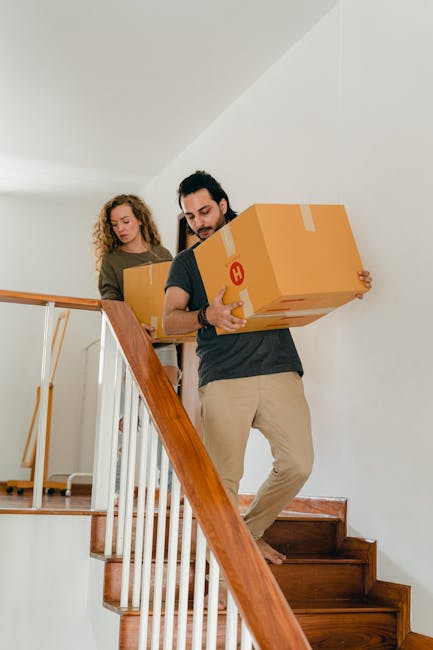
Narrow-Staircase Moves in Goodmayes: Costs and Solutions
Posted on 10/06/2026
Narrow stairs can turn a simple move into a careful, slightly nerve-wracking project. In Goodmayes, that often means tight hallways, awkward bends, small landings, and furniture that looks normal in the living room but suddenly feels enormous on the stairs. If you are planning Narrow-Staircase Moves in Goodmayes: Costs and Solutions, the good news is that there are sensible ways to make the job safer, smoother, and usually less expensive than a last-minute scramble.
This guide breaks down what makes these moves tricky, what influences the cost, and which solutions actually help in real life. We will look at planning, packing, lifting, access issues, and when it makes sense to bring in extra help. No fluff. Just the practical stuff that helps you avoid dents in the walls, strained backs, and that awkward moment when the sofa is half on the landing and nobody quite knows what to do next.
Why Narrow-Staircase Moves in Goodmayes: Costs and Solutions Matters
A narrow staircase changes the whole moving equation. A sofa that would be easy with a wide stairwell suddenly needs precise angles, controlled movement, and enough space for people to stand safely. On older terraces, maisonettes, and some flats around Goodmayes, this kind of access is common enough that it deserves proper planning rather than hope and elbow grease.
The real issue is not just inconvenience. Tight staircases increase the chances of wall scuffs, broken fittings, damaged banisters, and injured fingers or backs. They also affect timing. A move that should have taken an hour can drag on because every turn needs a reset. If you are paying by the hour, that matters. If you are doing it yourself, it can make the whole day feel longer than it already is.
Costs also shift once access is difficult. You may need extra labour, more protective materials, a smaller vehicle for local collection and shuttle work, or specialist handling for bulky items. In some cases, it is actually cheaper to spend a little more on preparation than to pay for avoidable damage later. To be fair, that is usually the part people notice only after the move.
Expert summary: narrow-staircase moves are not "harder in theory" only; they change labour, timing, equipment, and risk. The most cost-effective solution is often planning first, then choosing the right level of help for the specific staircase and furniture involved.
How Narrow-Staircase Moves in Goodmayes: Costs and Solutions Works
The process starts with access assessment. That means checking stair width, landing size, ceiling height, turn angles, banisters, light fixtures, and any pinch points at doors or corners. A move often fails not because the item is too heavy, but because the route is too tight for a clean pivot. A wardrobe may fit on paper and still refuse to make the bend. Annoying, yes. Very common, too.
Next comes item planning. Sofas, mattresses, beds, white goods, desks, and pianos are the usual problem pieces. The more rigid and awkward the item, the more likely it is to need dismantling, wrapping, carrying at an angle, or transporting through an alternative route. In some homes, this means removing doors, taking furniture apart, or using a window or balcony route if that is safe and practical.
Then there is people planning. One person can guide and another can lift, but narrow stairs often work better with a small, coordinated team. More bodies do not always help; too many hands can actually make the route crowded. That is why the best results usually come from calm communication, one lead person, and a clear sequence of moves.
Costs are shaped by a few main factors:
- Staircase difficulty: width, turns, steepness, and landing size.
- Item type: heavy, fragile, large, or awkwardly shaped furniture costs more to handle.
- Need for dismantling: furniture assembly and disassembly adds time.
- Protective materials: blankets, wraps, straps, corner guards, and floor protection.
- Labour time: more time on site usually means a higher final price.
- Parking and access outside the property: a difficult road setup can add delays.
Some moves can be handled with careful DIY effort. Others are better approached as a managed removal job where the route, staffing, and protection are considered from the start. If you are already juggling packing and deadlines, it may help to read practical ideas for keeping the whole move under control before the lifting even begins.
Key Benefits and Practical Advantages
A good narrow-staircase plan does more than avoid damage. It improves confidence, speeds things up, and reduces the feeling that the move is fighting back. That matters more than people expect. Moving day already has enough noise, people, and decisions without a wardrobe trying to audition for a gymnastics routine.
- Less risk of injury: careful route planning and proper lifting reduce strain on backs, shoulders, and wrists.
- Lower damage risk: walls, paintwork, banisters, and furniture all benefit from better protection.
- Faster loading and unloading: knowing the route ahead of time avoids repeated stops and awkward resets.
- Better cost control: fewer delays and less damage usually mean fewer surprise expenses.
- More confidence for fragile items: large or delicate items can be handled with the right method instead of brute force.
- Less stress on move day: once the route is mapped, the whole thing feels more manageable.
There is also a quiet benefit that gets overlooked: better decisions about what actually needs to move. When access is tight, decluttering becomes more than tidying. It becomes a space-saving, cost-saving strategy. If that sounds familiar, the guide on decluttering before a move is worth a look, especially if you are dealing with items that barely fit the staircase in the first place.
Who This Is For and When It Makes Sense
This type of move is relevant to a surprisingly broad group. If you live in a flat, a converted house, or a property with tight internal stairs, you probably already know the issue. But the challenge also appears in family homes, shared houses, and smaller terraces where upper floors were never designed for oversized modern furniture.
It makes sense for:
- people moving into or out of upper-floor flats
- tenants with narrow internal staircases or awkward common areas
- homeowners moving bulky furniture between floors
- students with limited access and small stairwells
- anyone with heavy or fragile items that need careful handling
- people moving on a tight schedule who cannot afford multiple attempts
If you are moving near station roads, terraced streets, or places where parking is already a bit of a puzzle, access planning matters even more. There is a useful local angle in these Goodmayes access and parking tips, because external access can be just as important as the staircase itself.
Sometimes the move is not complicated because of the building alone. It is complicated because the timing is tight, the item is heavy, and you are trying to do too much at once. Been there, to be honest.
Step-by-Step Guidance
If you want the move to go well, treat the staircase like a route to be studied, not just a path to be used. The more you know before the carrying starts, the less likely you are to improvise under pressure.
- Measure the route. Check stair width, landing depth, doorway clearance, and any low ceilings or sharp corners. Measure the item too, including protruding handles or feet.
- Identify the weak points. Note mirrors, light fittings, railings, and narrow turns. One low pendant lamp can become the thing everyone keeps ducking under.
- Decide what should be dismantled. Beds, wardrobes, and tables often move better in parts. The aim is not elegance. It is survival.
- Protect the route. Use floor coverings, blankets, and corner protection on walls and bannisters. This is where small preparation saves larger repair costs.
- Prepare the item. Remove loose shelves, drawers, handles, and fragile parts. Wrap surfaces before lifting starts.
- Assign roles. One person leads, one or two carry, and one watches the route from above or below. Clear communication matters more than enthusiasm.
- Test the angle before committing. Many items need a tilt-and-turn approach rather than a straight carry. Pause if the item starts dragging or twisting awkwardly.
- Know when to stop. If the item is grinding walls, the team is straining, or the route is becoming unsafe, step back and re-plan.
For packing support before the move itself, the practical advice in how to pack properly for house moving can help reduce the number of things you are trying to wrestle down the stairs on the day.
And if the item in question is a bed, mattress, or frame, it is worth reading this step-by-step mattress and bed transport guide before you start taking bolts apart in the hallway.
Expert Tips for Better Results
Good staircase moves are usually won in the preparation stage. Small adjustments make a surprisingly big difference. A little bit of patience here saves a lot of swearing later. Not that anyone would ever do that, of course.
- Take the widest measurement, not just the obvious one. Handrails, skirting, and door frames can reduce usable space.
- Use proper lifting posture. Bend at the knees, keep the load close, and avoid twisting while carrying.
- Keep the route clear. Shoes, bags, and loose boxes on the stairs are just waiting to become trip hazards.
- Work in shorter carries. Fatigue makes mistakes more likely, especially on awkward turns.
- Wrap corners and edges first. It is the sharp edge that tends to leave the mark on the wall.
- Pause on landings. Landings are reset points. Use them to breathe, regrip, and re-angle the item.
- Plan around weather and timing. A wet entrance mat, muddy shoes, or poor evening light can make a move less controlled than expected.
If you are handling something unusually heavy, the advice in safe practices for lifting heavy objects is a sensible companion read. For especially valuable or sensitive items, like a piano, there is also a strong argument for specialist handling; the realities are discussed in professional versus DIY piano moving.

Common Mistakes to Avoid
Most stair-related moving problems come from the same handful of mistakes. The pattern is familiar: under-measure, overestimate strength, rush the turn, and hope the item cooperates. It rarely does.
- Not measuring properly: guessing the staircase size is a classic mistake and usually an expensive one.
- Skipping route protection: minor scrapes become patch-up jobs, and patch-up jobs cost money.
- Trying to lift too much with too few people: this is how backs complain for the next three days.
- Ignoring awkward item shape: width is not the only problem; depth, height, and protrusions matter too.
- Forgetting to plan the exit route: a move can fail at the front door before it ever reaches the stairs.
- Rushing on the landing: that is where many slips and knocks happen.
- Leaving boxes too heavy: especially books, tools, and kitchenware. Heavy boxes plus stairs is a bad pairing.
One other mistake worth calling out: assuming storage is a sign of delay rather than strategy. If an item will not safely fit through the stairs on move day, temporary storage can be the cleaner option. More on that is available at storage options in Goodmayes and, for furniture specifically, how to protect a sofa in storage.
Tools, Resources and Recommendations
You do not need a warehouse of equipment, but the right tools make a big difference. The aim is to make the move controlled and repeatable, not heroic.
- Furniture blankets: help protect surfaces and soften accidental contact with walls.
- Removal straps or lifting straps: useful for keeping posture more stable on heavy items.
- Gloves with grip: better control, less slipping, fewer crushed fingers.
- Corner protectors: especially useful where turns are tight.
- Floor runners or coverings: reduce scuffs and give you a cleaner path.
- Tools for dismantling: screwdrivers, Allen keys, and a labelled bag for fixings.
- Strong packing tape and labels: simple, but often the difference between organised and chaotic.
If you still need boxes or packing materials, the dedicated packing and boxes page is a practical place to start. For more general moving support, removal services in Goodmayes and the broader services overview can help you compare what level of help suits the move.
For people moving larger households, the combination of house removals in Goodmayes and a smaller, flexible vehicle such as a removal van can be useful where access is tight and repeated trips are likely.
Law, Compliance, Standards, or Best Practice
For a move involving stairs, the main compliance concerns are safety and reasonable care. In the UK, employers and service providers should work in line with general health and safety expectations, and anyone handling heavy items should take care to avoid foreseeable injury or damage. If a moving team is involved, they should have clear procedures for manual handling, route protection, and safe loading practices.
For homeowners and tenants, the practical point is simpler: do not create avoidable hazards. Keep stairs clear, use suitable footwear, and avoid lifting beyond your limits. If a stairwell feels unsafe for a particular item, that is not a failure. It is useful information. Sometimes best practice is to stop, reassess, and choose a different method.
Insurance and risk planning are worth considering too. If a move is likely to involve fragile furniture, difficult access, or expensive items, it is wise to understand what cover and responsibilities apply before the first box is lifted. You can review the company's approach on insurance and safety, along with their health and safety policy and terms and conditions.
For customers who want clarity on booking, payment, and what is included, the relevant pages on pricing and quotes and payment and security are useful checkpoints. That kind of transparency helps avoid misunderstandings on moving day. Always a plus.
Options, Methods, or Comparison Table
There is no single best method for every narrow-staircase move. The right choice depends on the item, the stair layout, your confidence, and how much time you have. Here is a simple comparison to make the decision easier.
| Method | Best for | Pros | Limitations | Typical cost impact |
|---|---|---|---|---|
| DIY with friends | Small loads, light furniture, short stairs | Low upfront cost, flexible timing | Higher risk of injury or damage, less reliable for heavy items | Lower cash cost, higher risk if mistakes happen |
| Partial dismantling and DIY carry | Flat-pack furniture, beds, modular pieces | Good balance of cost and control | Requires tools, time, and patience | Moderate |
| Professional moving help | Bulky, fragile, or valuable items | Safer handling, faster execution, less stress | Higher direct cost | Usually higher upfront, but often better value for tricky access |
| Storage-first approach | Items that cannot be moved safely on the day | Reduces pressure, allows better planning | Extra step, possible storage fees | Moderate to higher depending on duration |
If you are comparing different removal setups, the pages for man and van in Goodmayes, man with a van in Goodmayes, and removals in Goodmayes can help you think through the scale of service you need. For more specialised or complex jobs, removal companies in Goodmayes may be the better fit.
Case Study or Real-World Example
Picture a two-bedroom flat in Goodmayes with a narrow internal staircase, a sharp turn halfway up, and a fairly unforgiving landing. The main challenge is not the number of items. It is the sofa, bed frame, and fridge freezer. Each one is manageable on its own, but together they turn the staircase into the bottleneck for the whole move.
In a case like this, the most practical approach is usually a staged one. First, smaller boxes and soft items go out, which keeps the stairs clearer. Then the bed frame is dismantled and wrapped. The fridge is checked to see whether it can safely go through the route upright, or whether a different angle and extra handling are needed. Finally, the sofa is assessed on dimensions alone. If it is too wide for the turns, forcing it is not a solution; it is a problem waiting to happen.
The biggest saving often comes from deciding early. Once the team knows the staircase is tight, they can protect the walls, plan the turn, and avoid wasting time with repeated failed attempts. That sort of planning also helps with parking and loading order outside the property. If you are dealing with a local move between nearby streets or estates, resources like estate-specific moving advice for IG3 homes and the Seven Kings to Goodmayes removals guide can add useful local context.
The key lesson? The move felt difficult, but it was not impossible. It just needed the route treated as the main job, not an afterthought.
Practical Checklist
Use this before moving day. It keeps the whole thing far more manageable.
- Measure the staircase, landings, and doorways.
- Measure every large item, including handles and feet.
- Decide what can be dismantled.
- Label screws, fixings, and removable parts.
- Clear the stairs and hallway completely.
- Protect floors, walls, and banisters.
- Check whether parking and access outside the property are workable.
- Set aside gloves, straps, tape, blankets, and basic tools.
- Assign one person to direct the route.
- Keep water, rest breaks, and a backup plan in mind.
- Move the easiest items first to reduce congestion.
- Stop if the lift feels unstable or unsafe.
If bulky waste or old furniture will not be moving with you, it may help to sort that out early rather than leaving it for the last day. The page on bulky waste rules in Goodmayes and Redbridge is a sensible reference point before disposal or clearance decisions are made.
Conclusion
Narrow-staircase moves in Goodmayes are not unusual, but they do reward careful planning. Once you understand the staircase, the furniture, the labour involved, and the likely pinch points, the whole move becomes more predictable. That usually means lower risk, better timing, and fewer hidden costs.
The smartest approach is rarely brute force. It is usually a mix of measurement, dismantling, route protection, and choosing the right level of help for the job. Sometimes the most cost-effective move is the one where you slow down a little, measure twice, and avoid making the staircase your enemy. It happens.
Get a free quote today and see how much you can save.
And if you are still at the planning stage, take a breath. A tight staircase is a challenge, yes, but with the right preparation it does not have to dominate the whole move.