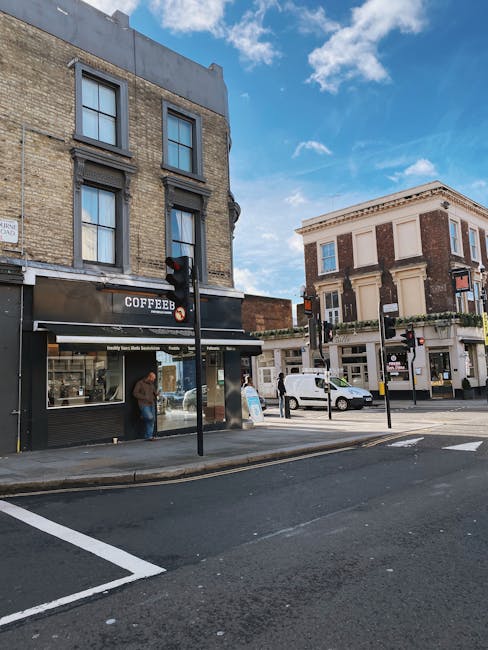
How We Relocated a Goodmayes Cafe With Zero Downtime

Moving a cafe sounds simple on paper. Pack up the cups, shift the tables, reopen in the new spot. Easy, right? Not quite. If you run a busy coffee shop in Goodmayes, even a single missed service can mean lost regulars, wasted stock, a rattled team, and a very long day with too much instant coffee. That is exactly why How We Relocated a Goodmayes Cafe With Zero Downtime matters: it is about moving a working business without letting customers feel the disruption.
In this guide, we break down how a cafe relocation can work in the real world, what planning actually matters, and where businesses often get caught out. You will get a practical, honest view of timing, compliance, equipment handling, staff coordination, and the little details that make the difference between a smooth handover and a messy one. Let's face it, a cafe move is not just a removal job. It is a business continuity project with espresso machines.
Why How We Relocated a Goodmayes Cafe With Zero Downtime Matters
For a cafe, downtime is not just an inconvenience. It is a direct hit to daily revenue, customer habit, team morale, and stock freshness. People pop in for routine as much as coffee. If your regulars walk past closed shutters twice in a row, some of them will drift off to another spot nearby. That can happen quickly, especially in a local area where customers have choices and are creatures of habit.
A zero-downtime relocation matters because cafe trade is time-sensitive. Fresh food, chilled ingredients, hot drinks, morning commuters, lunch crowds, school runs, local deliveries, the whole lot. You cannot treat a cafe move like shifting a storage unit. The goal is to keep the business alive through the move, not simply survive it.
There is also a trust angle. A well-run relocation tells customers and suppliers that the business is stable, organised, and worth sticking with. In our experience, that confidence matters more than many owners expect. A smooth move sends a message: this place is still open for business, still dependable, still local.
Expert summary: A zero-downtime cafe move is really three jobs at once: moving equipment safely, protecting trading continuity, and keeping the customer experience intact. If you miss one of those, the whole project feels harder than it should.
How How We Relocated a Goodmayes Cafe With Zero Downtime Works
The process starts long before a van arrives outside. A successful cafe relocation depends on sequencing. You do not move everything at once. You map what must stay live, what can be switched off briefly, and what can be duplicated or staged in advance. That means thinking about coffee machines, fridges, shelving, signage, card terminals, cleaning products, stock rotation, opening hours, and who is responsible for each bit.
We usually break the move into phases. First comes an audit of the premises and equipment. Then a packing and labelling plan. After that, there is a move window, a transport route, and a setup plan for the destination. If the cafe is relocating across Goodmayes or into a nearby high-street unit, access and parking become a major part of the plan. A van arriving at the wrong time can throw everything off. Tiny detail, huge impact.
The other big factor is continuity planning. That means deciding how the cafe will keep serving before, during, and immediately after the move. Sometimes that is done through staged closure hours, pre-packed essentials, or a split-team setup where one crew handles the transfer while another handles the final service at the old site. To be fair, it is a bit like changing a tyre while the car is still rolling. Not impossible, but you need discipline.
For some businesses, broader removal support is also useful, especially where stock, furniture, and display items need to move together. Services such as commercial moves or a more flexible man and van setup can suit smaller hospitality moves where speed and access matter more than brute scale.
Key Benefits and Practical Advantages
The obvious benefit is that you keep trading. But there are several other advantages that are easy to miss when you are focused on the physical move.
- Less revenue loss: keeping service live protects peak trading periods and repeat custom.
- Better customer retention: regulars notice reliability, especially if you communicate clearly.
- Less food waste: careful timing and cold-chain handling reduce spoilage.
- Lower staff stress: a structured plan is far easier on the team than a chaotic overnight scramble.
- Cleaner setup at the new site: items are labelled, staged, and installed in a sensible order.
- Fewer costly surprises: access, insurance, lifting, and parking can be handled in advance instead of becoming a problem on the day.
There is also a softer benefit: momentum. A move can feel like a reset, even a fresh start, if it is handled neatly. New layout. Better workflow. Smarter customer flow. And yes, a lot less "where did we put the oat milk?" energy. That alone is worth planning properly.
Who This Is For and When It Makes Sense
This approach suits independent cafe owners, small hospitality groups, and takeaway operators who cannot afford a long closure. It is especially relevant if your current site is too small, your lease is ending, footfall has shifted, or you have found a better unit nearby but need to protect trade while the move happens.
It also makes sense if you are moving equipment that is awkward, fragile, or expensive to replace. Espresso machines, fridges, display cabinets, commercial grinders, fixed shelving, and glass-fronted units all deserve more than a casual lift-and-load. They need planning, padding, and a route that does not involve a narrow staircase and a prayer.
If you are comparing moving options, a dedicated removals partner can be a safer fit than improvising with staff cars and borrowed help. Some owners start by exploring broader support like removal services or a more specialist removal company when the move includes stock, furniture, and time-critical setup work.
You should especially consider this model if:
- you need to reopen the same day or next day
- your customer base depends on routine trade
- you are moving in stages rather than all at once
- the new premises need fitting out while the old one is still operating
- you want a clean handover with minimal disruption to customers and staff
Step-by-Step Guidance
Here is the practical version, stripped of fluff. This is the part that usually makes the difference between a stressful relocation and a controlled one.
1. Start with a full inventory
List everything that is moving: furniture, fridges, cups, tables, signage, POS equipment, menu boards, packaging, cleaning supplies, and all stock with dates. It sounds obvious. People still skip it. Then they spend an hour at the new site looking for a box marked "miscellaneous," which is never a good sign.
2. Separate essentials from non-essentials
Decide what must be available for service on day one and what can be moved later. Not every decorative item matters immediately. Priority should go to equipment and stock that directly affects trade.
3. Map the move window around trading peaks
For a cafe, timing is everything. Morning trade, lunchtime trade, and weekend footfall can be very different. A good relocation plan avoids peak periods and leaves a buffer for setup delays. If you are near busy roads or station-adjacent streets, loading times matter even more.
4. Coordinate both premises
The old site should be cleared in an order that allows final service without chaos. The new site should be ready before the key items arrive. That means utilities checked, access sorted, and layouts marked out in advance. A room with no clear plan turns into a pile of boxes very quickly.
5. Label everything properly
Label boxes by room, function, and priority. For example: "prep counter - daily use," "front of house - opening items," "cold storage - do not leave out," or "cash desk - setup first." Good labels save time later, especially when everyone is tired and hungry.
6. Protect delicate equipment
Wrap fragile items, secure moving parts, and make sure commercial appliances are disconnected correctly. If an item is heavy, awkward, or expensive to repair, use the right kit and enough hands. That is not the moment to improvise with a tea towel and optimism.
7. Rebuild in service order
At the new site, set up in the order customers will experience the cafe: signage, entrance, counter, payment point, seating, prep, and serving flow. Then test power, temperature, card machines, and basic workflow before opening the doors.
8. Do a soft opening before full service
If possible, run a quiet test service or internal dry run. This exposes small issues: a plug socket in the wrong place, a shelf that blocks movement, or a till cable that was somehow packed with the pastry trays. Better to spot that at 7:30 in the morning than at the first customer rush.
Expert Tips for Better Results
The technical steps are one thing. The smart little decisions are another. Here are the bits that tend to make a relocation feel calmer and more professional.
- Make a "first hour" box. Put wipes, bin bags, tape, scissors, charger cables, spare pens, opening cash, and basic cleaning supplies in one clearly marked box.
- Photograph the old setup. Quick photos of shelving, cable runs, and counter layouts make rebuilding far easier.
- Keep perishable stock tightly controlled. Work with realistic timing so chilled items are not sitting out longer than necessary.
- Brief the team before moving day. Everyone should know who is doing what, when, and where.
- Allow a little slack in the schedule. Not much. Just enough. Because something always takes longer than you thought.
- Use the move as a layout reset. If the old cafe had clunky bottlenecks, fix them now rather than recreating the same pain in a new address.
One small but useful habit: assign one person to stop decisions getting muddy. Too many people trying to "help" can actually slow things down. There is always one box that gets moved twice because three people assumed someone else had it. Happens all the time, honestly.
Common Mistakes to Avoid
Most relocation problems are boring, predictable, and avoidable. Which is mildly annoying, because they are also the ones people repeat under pressure.
Underestimating access issues
Goodmayes roads, side streets, parking restrictions, stairways, and tight loading spaces can all affect timing. If access is awkward, plan for it early. Do not wait until the vehicle is outside and the team is already sweating.
Forgetting the customer journey
It is not enough to move the equipment. Customers need to understand where you are, when you open, and whether the move affects service. A clear communication plan reduces confusion and protects your regulars.
Packing by convenience instead of function
If boxes are packed just because they fit, unpacking becomes slower and messier. Functional packing matters more. Always.
Ignoring cleanup at the old site
A cafe handover often needs a proper final tidy. Leave the place neat and you save yourself stress later. Leave it messy and the "we will sort that later" problem gets bigger. It always does.
Not testing equipment after the move
Do not assume a machine is fine because it arrived in one piece. Check power, seals, temperature, and general operation before opening to the public.
Tools, Resources and Recommendations
You do not need a mountain of specialist kit, but the right basics help a lot. In a cafe move, small tools can save big time.
| Tool or resource | Why it helps | Best use |
|---|---|---|
| Label printer or heavy-duty labels | Speeds up unpacking and keeps zones organised | Inventory and box marking |
| Moving blankets and straps | Protects furniture and equipment in transit | Tables, fridges, display units |
| Food-safe containers | Supports cleaner stock handling | Ingredients, dry goods, disposables |
| Cleaning kit | Helps the new site feel ready to trade | Final wipe-down and setup |
| Layout sketch or floor plan | Makes rebuilding faster and more accurate | Front-of-house and prep areas |
| Removal support | Reduces lifting risk and time pressure | Heavy, awkward, or high-value items |
If the move involves broader business relocation support, services linked to office relocation services can be useful for administrative items, records, or setup materials, while a moving van or removal van can be a practical fit for short local transfers.
For planning and budget control, some owners also review transparent pricing and quotes early, rather than leaving costs until the last minute. That tends to make the whole thing feel less chaotic. And who needs more chaos?
Law, Compliance, Standards, or Best Practice
Any cafe move should be handled with sensible care around health, safety, and operational duties. Exact legal requirements can depend on the premises, the equipment, the lease, and the activities being carried out, so it is wise to treat this as a best-practice area rather than something to wing on the day.
At a practical level, you should think about:
- manual handling: heavy or awkward items should be lifted and carried safely, with proper team coordination
- slip and trip prevention: moving day often creates clutter, cable runs, and wet floors
- equipment isolation: appliances should be disconnected properly before transport
- food hygiene: stock, chilled items, and food-contact surfaces should be managed carefully during the move
- insurance and liability: check that the move is covered appropriately for your equipment and premises
It is also sensible to review internal policies and any relevant operational documents before move day. A business with a simple health and safety policy and clear insurance and safety guidance is usually in a better position to avoid preventable headaches.
For many small businesses, the best approach is straightforward: plan carefully, brief everyone, protect the public space, and do not leave anything to chance that could reasonably be controlled beforehand. That is not overkill. That is just good practice.
Options, Methods, or Comparison Table
Not every cafe move needs the same approach. The right method depends on size, timing, equipment, and how much disruption you can tolerate.
| Method | Best for | Pros | Trade-offs |
|---|---|---|---|
| Single-day relocation | Small cafes with limited equipment | Fast, simple, minimal overlap | Higher pressure, less room for delay |
| Staged relocation | Busy cafes with steady trade | More control, less downtime risk | Requires stronger planning and space management |
| After-hours move | Businesses that can spare the overnight window | Lower customer disruption | Tighter time pressure for setup and testing |
| Split-team move | Operations that need continuity during transfer | Protects trade and handover quality | Needs excellent coordination |
For a Goodmayes cafe, a staged or split-team move is often the most realistic if the business wants to stay visible and active. A totally compressed same-night shift can work, but it leaves little room for surprises. And surprises, as we all know, are rarely useful when there are pastries to sell.
Case Study or Real-World Example
Imagine a small independent cafe on a local high street, moving a short distance to a better unit with more seating and a cleaner workflow. The owner wants to keep serving regulars while the new shop is fitted out. The old site is still trading, but the new one needs shelving, counter equipment, and a full rearrangement of the back-of-house area.
The move begins with a simple plan: front-of-house furniture is boxed and labelled first, then less critical decorative pieces, then stock that can be rotated safely. The coffee machine and cold storage stay in service until the final window. Meanwhile, the new site is measured and mapped so the counter, till, and seating layout can be rebuilt in the right order.
On the day, the team focuses on the essentials. Stock is moved in small batches, equipment is padded and secured, and the opening box is kept separate. A final clean happens at the old premises, and the new site is given a quick functional test before the first customer arrives. The result is not magical. It is organised. That is the real trick.
What stands out most in a move like this is how much calmer it feels when decisions are made ahead of time. There is still pressure, of course. There always is. But the business keeps moving, customers stay informed, and the reopening feels like a continuation rather than a disruption.
Practical Checklist
Use this checklist as a final pre-move sanity check. It is the sort of list that saves you from forgetting one deeply annoying thing.
- Inventory completed and grouped by priority
- Old site and new site access checked
- Parking, loading, and timing confirmed
- Staff briefed on roles and sequence
- Fragile equipment wrapped and labelled
- Perishable stock handled appropriately
- Utilities and power points checked at the new site
- Card machine, till, and key devices ready for setup
- Cleaning kit and opening essentials packed separately
- Customer communication prepared for social media, signage, or direct notice
- Insurance and safety considerations reviewed
- Final clean and handover tasks assigned
- Soft opening or test run scheduled before full trade
If you want one simple rule, make it this: if an item is needed in the first hour of trading, it should never disappear into a random box. Sounds obvious, but it saves a lot of faff.
Conclusion
Relocating a cafe in Goodmayes without downtime is absolutely possible, but it only works when the move is treated like a live business project rather than a simple transport job. The equipment matters. The route matters. The timing matters. But so does the customer experience, the staff workflow, and the small details that nobody notices until they are missing.
When the plan is solid, the move can feel surprisingly controlled. You protect trade, reduce waste, keep regulars informed, and land in the new space with less stress than you expected. That is the goal. Not perfection. Just a move that lets the business keep going with confidence, one careful step at a time.
Get a free quote today and see how much you can save.
And if you are at the stage of comparing options, it is worth checking practical business support pages such as about us, contact us, or even the wider blog for more local moving guidance. A bit of clarity goes a long way.
Frequently Asked Questions
Can a cafe really move without shutting down for several days?
Yes, in many cases it can. The key is staged planning, careful timing, and a setup that lets the business keep serving while the relocation happens around it. The smaller and better organised the cafe, the easier this usually is.
What is the biggest risk in a zero-downtime cafe move?
The biggest risk is usually poor sequencing. If equipment, stock, staff, and access are not coordinated properly, the move becomes slower and service slips. Delays also tend to stack up, which is where the stress starts.
How far in advance should a cafe relocation be planned?
As early as possible. Even a short local move benefits from advance planning because access, parking, utilities, stock handling, and team scheduling all need time to line up.
What should be moved last from the old cafe?
Typically, the most essential trading items stay until the final window: key appliances, payment equipment, and anything needed for the last service. Decorative pieces and non-essential items can usually go earlier.
How do you protect coffee machines and fridges during a move?
They should be disconnected correctly, secured properly, and handled with suitable moving equipment. Heavy appliances should not be rushed or dragged. That is how damage happens.
Is it better to move a cafe overnight or in stages?
It depends on the business. Overnight moves can be quicker, but staged moves often reduce risk because they give you more room to control stock, access, and setup order. For busier cafes, staged is often safer.
Do I need to tell customers about the move in advance?
Yes. Clear communication helps retain regulars and prevents confusion. A simple notice, updated social post, or sign in the window can go a long way.
What kind of moving support is best for a small cafe?
Smaller cafes often benefit from flexible local removal support that can handle short-notice timing, awkward access, and mixed loads. The best fit depends on how much stock and equipment you are moving.
What should be packed in the first setup box?
Put in the things you will need immediately: tape, scissors, cleaning supplies, chargers, pens, cash float materials, labels, and a few essential tools. It saves the panic of hunting through boxes at opening time.
How do I know if my new unit is ready for opening day?
It should be ready in layout, power, access, and basic function. Test equipment, check counters and workflow, and make sure the team can move through the space without friction. If you need to squeeze sideways past the till, something is off.
What compliance issues should I think about during a cafe move?
Think about safe lifting, slips and trips, appliance disconnection, food handling, and insurance cover. The exact duties vary, but the general rule is simple: manage the move as safely and carefully as you would manage the business itself.
Can I use the relocation to improve my cafe layout?
Absolutely. In fact, that is often one of the best reasons to move. A new site gives you a chance to fix bottlenecks, improve customer flow, and set up a cleaner workflow for your team.